Early Morning Collision On The North–South Expressway Claims A Life
Seremban witnessed a fatal traffic accident early this morning involving a passenger vehicle and a stationary tanker lorry along the North–South Expressway’s northbound lane. The incident took place at approximately 4.30am near the 272.8km mark, just after the Seremban rest and service area. According to initial reports, a 26-year-old woman lost her life when the Proton Saga she was travelling in collided with the rear of a tanker lorry parked on the emergency lane. This event has drawn attention to traffic safety and the conditions of stationary vehicles on Malaysia’s major highways.
The Sequence Of Events Leading To The Serious Crash
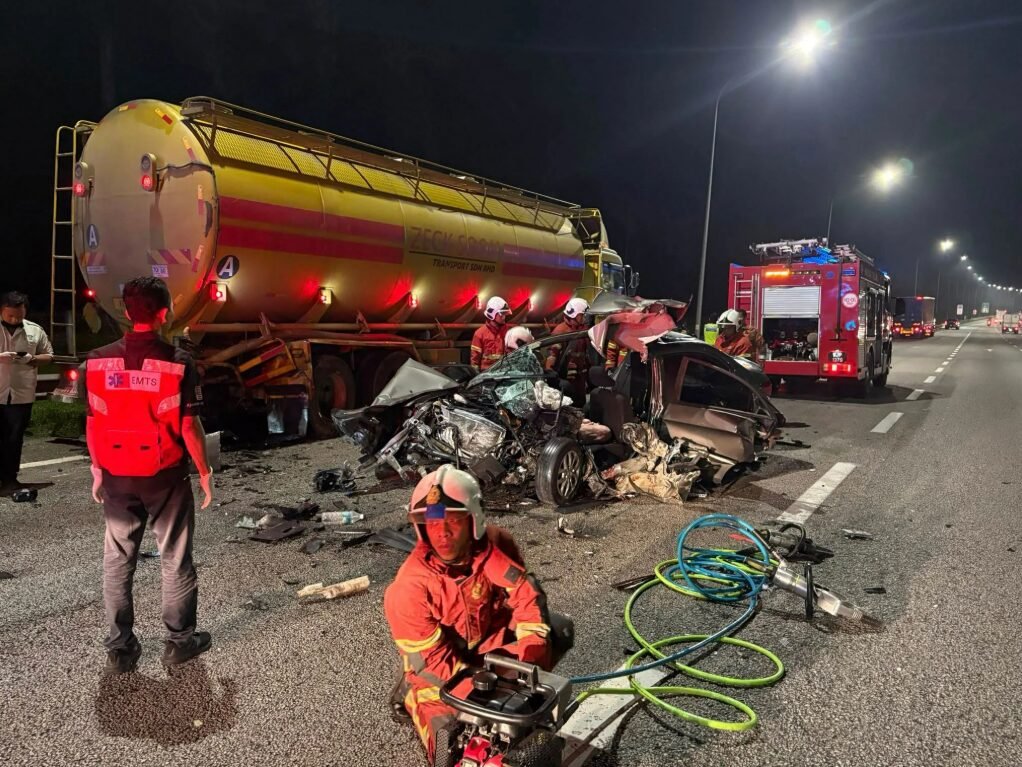
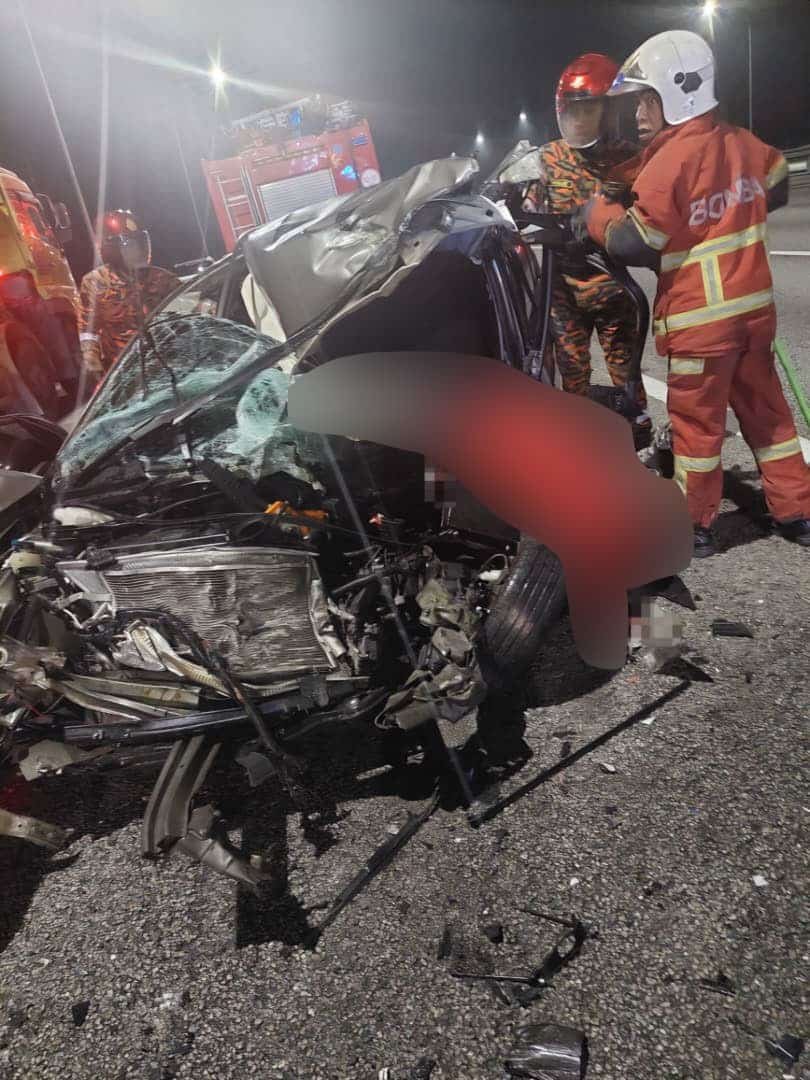
Based on the information provided by the Negeri Sembilan Fire and Rescue Department, the Proton Saga crashed into the back of a stationary tanker positioned on the emergency lane early at 4.30am. The tanker had been parked in the emergency lane presumably due to operational or unavoidable reasons, though official reasons for its stop have yet to be disclosed. The impact caused significant front-end damage to the car, and the female passenger seated in the front was trapped inside.
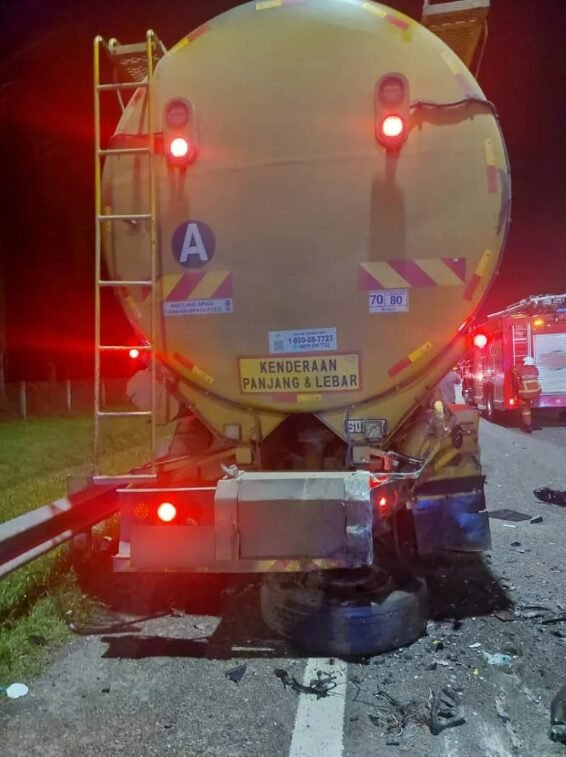
Fire and Rescue Department operations commander from the Seremban 2 station, Kamaruzaman, stated that an emergency call was received at 4.29am. A rescue team consisting of nine firefighting personnel, supported by one Fire Rescue Tender (FRT) and two Rapid Intervention Motorcycles (RIM), was immediately dispatched to the scene. The team arrived at 4.47am and began rescue operations promptly. Using specialised hydraulic equipment such as cutters and spreaders, the firefighters attempted to extricate the trapped woman from her seat. Despite the rescue efforts, medical personnel on site declared the woman deceased. Meanwhile, the driver of the Proton Saga, a 29-year-old man, sustained injuries and was sent to Tuanku Ja’afar Hospital for medical treatment. The tanker driver, a man in his 30s, was unharmed.
Authorities Provide Updates On Rescue Efforts And Investigations
Statements from the Negeri Sembilan Fire and Rescue Department indicated that the rescue operation was successfully brought under control by 4.57am. Full clearance of the accident site was completed by about 7.30am when the team was stood down. Police have taken custody of the deceased’s body for further procedures, and preliminary investigations are focused on the circumstances that led to the tanker being stationary on the emergency lane, as well as the factors contributing to the collision. According to official sources, investigations remain ongoing, with emphasis on traffic management and safety protocols along the expressway. No charges or conclusions have been made public at this stage.
The Incident Spurred Discussions About Highway Safety On Public Platforms
The accident has generated some discussion across social media and public forums. With users highlighting concerns about vehicles parked on emergency lanes and driver awareness during nighttime conditions. Industry observers note that such incidents underscore the importance of maintaining visibility, efficient roadside emergency management, and adherence to traffic regulations on major highways in Malaysia. Including those connecting states such as Selangor and regions like Seri Kembangan and Batu Caves. Additionally, experts stress the role of continuous engineering improvements and educative campaigns by the authorities to mitigate risks associated with stationary vehicles and unexpected obstacles on fast-moving roadways.
Assessing The Immediate Aftermath And Long-Term Considerations For Road Safety
In the short term, the accident resulted in temporary traffic congestion as emergency services managed the scene on the North–South Expressway. The closure and clearance of lanes impacted the northbound flow, causing delays for motorists travelling through Negeri Sembilan. In the longer term, this incident highlights ongoing trends concerning highway safety engineering and enforcement across Malaysia’s expressway network. Authorities may consider reviewing safety standards for emergency lane usage and the protocols for vehicles that must stop on the roadside. Balancing operational necessity with risk mitigation. Enhanced traffic monitoring and infrastructure improvements remain part of the wider strategy aimed at reducing traffic accidents nationwide.