

China to enforce new law on dissemination of explicit media from January 2026
Starting from January 1, 2026, China will enforce a revised “China new law Online obscenity” Public Security Administration Punishments Law which imposes stricter penalties on individuals sharing obscene photos or videos, even in private, one-to-one digital communications. The legislation was announced in Beijing and is set to affect the management of explicit content shared throughout Chinese digital platforms. The law heightens concerns over digital safety and legal responsibilities, with indirect implications that resonate beyond China’s borders, including countries like Malaysia where cross-border digital communication is prevalent.
The amendment responds to high-profile incidents involving explicit media dissemination
The updated regulation follows the widely reported “Nanjing Hongjie incident” earlier this year, where a 38-year-old man, disguised as a woman, manipulated scores of men into sexual encounters. He secretly recorded these activities and distributed the videos for profit, leading to an extensive online spread of explicit footage. This event drew public and official attention to the limits of current laws regulating obscene media dissemination, particularly on digital platforms frequently accessed in metropolitan areas like Selangor and urban centres such as Seri Kembangan.

Official guidelines clarify penalties including private sharing and minor protections
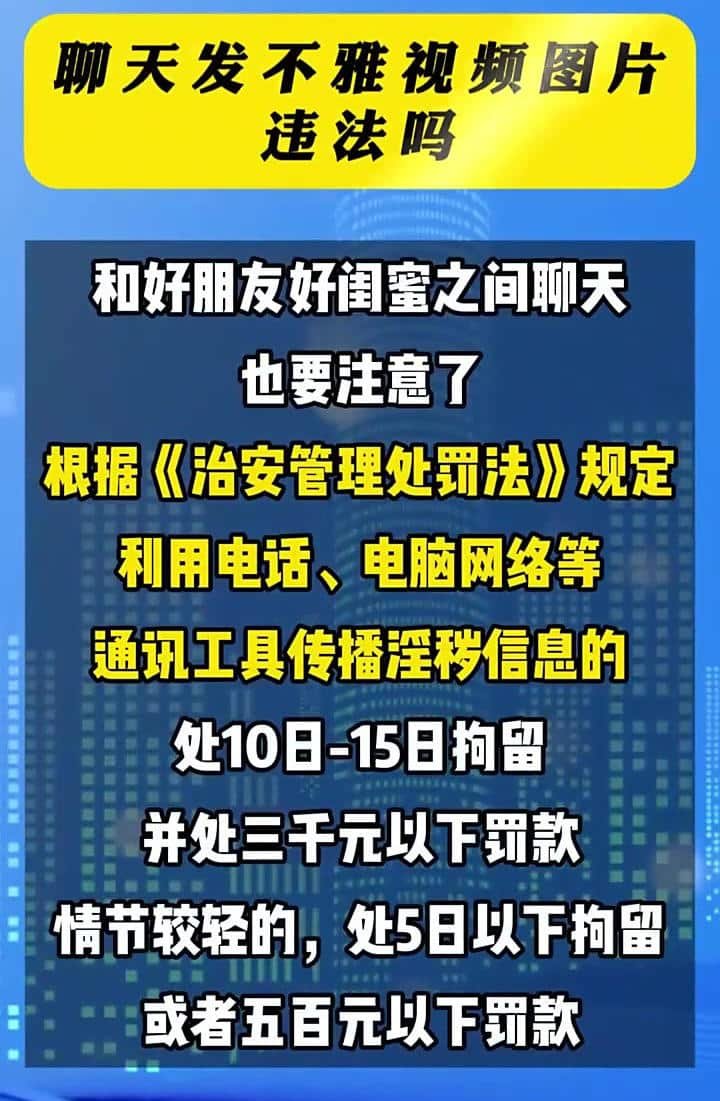
According to Chinese authorities and reports from Southern Metropolis Daily, the revised Article 80 of the Public Security Administration Punishments Law removes the previous contextual limitations on what constitutes illegal dissemination of obscene materials. The law now covers all forms of explicit content distribution, whether public or private, including one-to-one chats on platforms similar to WeChat, which are widely used across Chinese and Malaysian internet users alike. Offenders may face administrative detention ranging from 10 to 15 days and fines up to 5,000 yuan (approximately RM2,894). Lesser offenses may warrant up to five days’ detention or fines between 1,000 to 3,000 yuan (approximately RM579 to RM1,736).
Legal responsibility extends to digital group administrators and commercial profiteers
Authorities also highlight that group chat administrators who fail to control obscene content within their groups could be held accountable. When dissemination occurs under “serious circumstances” or is conducted for profit, criminal sanctions become applicable. The Supreme People’s Court of China clarified that illegal earnings exceeding 5,000 yuan constitute criminal activity, with profits between 30,000 to 50,000 yuan (around RM17,364 to RM28,940) or more triggering substantially stricter penalties. Moreover, explicit material involving minors results in amplified punishments in line with China’s Law on the Protection of Minors, emphasising prioritised safeguarding of children and teenagers from exposure to harmful content.
Social media and public discourse reflect cautious awareness about the law’s broader effects
The amended regulations have prompted discussions on social media platforms and within legal circles, with commentators noting the increased difficulty of regulating private digital interactions. Cybersecurity experts observe that in regions such as Seri Kembangan and Batu Caves—areas with dense digital activity—there may be greater scrutiny of message exchanges, balancing user privacy with public safety concerns. Observers also point out the ongoing challenge of moderating content in the fast-evolving digital landscape while aligning law enforcement with technological advancements.
The new law is expected to influence digital communication safety and regulatory enforcement over time
In the short term, enforcement of the revised Public Security Administration Punishments Law could lead to increased reporting of internet-based dissemination of obscene media and stronger administrative measures. This may prompt platforms operating domestically and regionally to enhance content monitoring and user management systems. Over the longer term, the legal reforms may encourage developments in digital safety protocols and regulatory frameworks extending beyond China’s borders, impacting cross-border digital content sharing practices, including those involving Malaysia and neighbouring countries. The law’s focus on safeguarding minors specifically aligns with a wider regional emphasis on protecting youth from harmful digital exposure.


